
Defined as cephalopods with a long body, eight arms and a pair of tentacles, squid are some of the most unique creatures in the oceans. If you’re a seasoned recreational diver, you may have encountered a squid. While most common in the North Atlantic, they are found in saltwater bodies throughout the world. Squid are brilliant, seemingly mesmerizing, marine animals that are known for their graceful swimming abilities. In this post, you’ll learn nine fun facts about squid.
#1) Squid Are Camouflaged
Like octopuses, squid are camouflaged to protect against predators. It’s not uncommon for sharks, seals, whales, dolphins and even birds to prey on squid. Most of these common predators, however, hunt by sight. As a result, squid have evolved to develop camouflaged skin that conceals them in their natural habitat. Some squid are even able to change the color of their skin, allowing them to adapt to a variety of different environments. Known as active camouflage, it’s an evolutionary trait that’s used by squid to conceal themselves. If a squid is resting in yellow sand at the bottom of the sea, it may change its skin to reflect this yellow color.
#2) There Are Over 300 Species of Squid
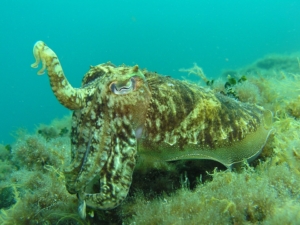
There are over 300 species of squid known to exist. All squid are classified as cephalopods, but no two species are exactly the same. Marine biologists further categorize squid as either myopsida or oegopsida. The former type of squid typically inhabits shallow waters, whereas the latter type inhabits deeper waters.
Some of the most common species of squid include the following:
- Giant squid
- Vampire squid
- Humboldt squid
- European squid
- Japanese flying squid
- Caribbean reef squid
- Longfin inshore squid
- Neon flying squid
- European flying squid
- Firefly squid
- Midwater squid
#3) Squid Are Fast Swimmers
Unlike seahorses, squid are incredibly fast swimmers. According to Animal Planet, these majestic cephalopods can swim at a speed of up to 25 miles per hour (mph). As a result, squid are the fastest-swimming invertebrates in the oceans. How are squid able to swim so fast exactly?
The fast swimming speeds of squid can be attributed to their use of jet propulsion. No, squid aren’t powered by the same jet engines as commercial airliners. Rather, they suck water into a small sac, followed by quickly releasing the water to “propel” themselves through the oceans. This process is known as jet propulsion — and it’s the reason why squid are such adept swimmers. When swimming, squid will suck water into a muscular sac. The sac essentially becomes pressurized, at which point the squid can quickly release the trapped water to propel itself through the water.
#4) The Giant Squid Is the World’s Largest Squid
Given its name, it shouldn’t come as a surprise to learn that the giant squid is the world’s largest squid. According to various studies, the giant squid can reach lengths of up to 43 feet. With that said, female giant squid are larger than their male counterparts. While a fully grown female giant squid can reach up to 43 feet long, males typically have a maximum length of 33 feet when fully grown.
Unfortunately, little is known about the giant squid’s behavior. It wasn’t until 2004 when a giant squid was caught on camera. In 2012, a second giant squid was filmed off the coast of Chichijima. Marine biologists do know, however, that giant squid live in deep waters. Giant squid inhabit waters ranging from 980 to 3,280 feet. As a result, you probably won’t encounter these behemoth-sized marine animals when diving.
#5) Squid Release Ink as a Biological Defensive Mechanism
Even if you have limited knowledge of squid, you’re probably familiar with their ink-based biological defensive mechanism. If a squid feels threatened by a potential predator, it will release a thick black ink-like substance from a sac. The purpose of this ink isn’t to poison or otherwise harm potential predators. Rather, squid release ink to quickly conceal themselves in an effort to escape.
The ink itself is a solution of melanin particles. When released into the water, the melanin particles manifest as a black cloud. As the black cloud of ink encompasses the squid, it uses this opportunity to quickly swim away from the potential predator.
#6) Squid Have Large Eyes
Aside from their tentacles, perhaps the most distinguishable feature of squid is their large eyes. A giant squid, for instance, can have pupils measuring over 3.5 inches in diameter, according to National Public Radio (NPR). Their large eyes allows them to see longer distances — and at greater clarity — than other marine animals with smaller eyes. The pupil size of an animal’s eyes affects how much light it’s able to detect. Animals with large eyes, including squid, are able to collect more light than animals with small eyes. Because of this, the large eyes of squid enhance their sense of sight, making them highly proficient marine predators while also improving their ability to escape from other potential predators.
#7) Diving With Squid Can Be Dangerous
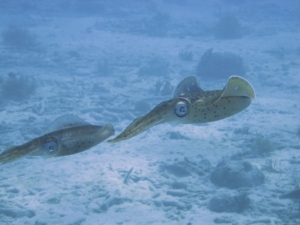 If you see a squid while diving, you should maintain a safe distance. Since the 13th century, there have been dozens of reports of squid, as well as other cephalopods, attacking humans. With that said, however, squid are still docile marine animals that prefer to avoid encounters with potential predators, including humans.
Furthermore, only large squid pose a threat to humans. Assuming you dive at shallow depths, you shouldn’t encounter large squids like the giant squid or colossal squid. Regardless of size, though, it’s best to err on the side of caution by maintaining a safe distance from squid. You can look at squid while diving, and you can even take photos or videos of them. Just remember not to touch or otherwise disturb any squids that you encounter while diving.
#8) Squid Are Essentially Snails With a Shell
You might be surprised to learn that squid are essentially snails without a shell. Both squid and snails are considered mollusks, which are invertebrate animals that live in the water or other wet habitats. One of the primary differences between squid and snails, however, is that only snails have a shell.
As invertebrates, neither squid nor snails have a vertebral column. But only snails have a shell. Squid are essentially shelless invertebrates, making them vulnerable to other predators in the ocean. Squid aren’t the only mollusks without a shell. Others include banana slugs and octopuses.
#9) Squid Grab Prey Using Their Tentacles
When hunting, squid use their tentacles to grab prey. Using its large eyes, a squid begins its hunt by scanning the surrounding waters for prey. Once a squid sees a prey, it will attempt to sneak up from behind. Assuming the squid gets close enough, it will then grab the prey using its two tentacles. Next, the squid will pull the prey closer to its body, at which point the squid will constrain the prey using its eight arms. Squids have suction cups on their tentacles and arms that, like traditional suction cups, allow them to stick to surfaces, including the bodies of prey.
After a squid has grabbed a prey, it will use its beak to bite and devour it. A squid’s beak has dozens of small teeth that allows it to break down food into smaller pieces. In a typical day, a squid may consume up to 30 percent of its body weight in food. Depending on the particular species, a squid’s diet may consist of crabs, shrink, fish and oysters.
Want to create your own custom dive logs? Contact us today to learn more about our custom dive logs.
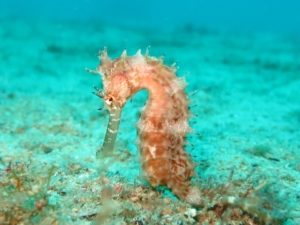 Marine biologists have identified 47 species of seahorses, according to
 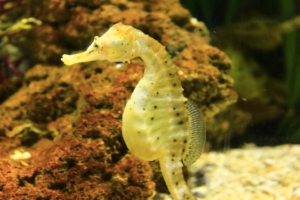 Don’t let their small size fool you into thinking seahorses are lightweight eaters. It’s not uncommon for seahorses to eat up to 3,000 brine shrimp each day. Furthermore, seahorses usually eat between 20 and 50 times per day, with each session consisting of hundreds of brine shrimp.
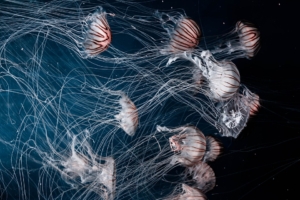 To say jellyfish are old would be an understatement. While it’s unknown exactly when jellyfish first appeared, marine biologists say they’ve been around for at least 500 million years. Considering that dinosaurs are just 66 million years, that’s pretty impressive to say the least. During that time, jellyfish have remained one of the world’s most resilient marine animals. They are able to survive in a wide range of aquatic environments while also reproducing at incredibly fast rates.
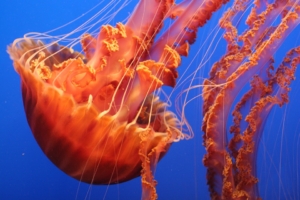 Jellyfish have millions of stinging cells, which they use to stun prey. The stinging cells are attached to long tentacles. When a jellyfish comes across prey, it will wrap its tentacles around the prey. The stinging cells will then inject toxin into the prey, resulting in paralysis. Of course, the severity of a jellyfish’s sting varies depending on the species. In humans, some species of jellyfish only cause minor pain. Other species of jellyfish, however, can cause severe pain or even anaphylaxis shock. In the Philippines alone, it’s estimated that jellyfish kill approximately 2o to 40 people each year, making them significantly more deadly than sharks.
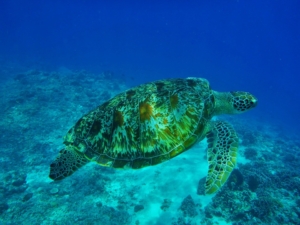 Also known as marine turtles, sea turtles are marine mammals that, like other turtles, have a hard and leather-like shell. It’s unknown exactly when sea turtles first appeared, though some marine biologists believe they’ve been around for over 110 million years.
 When you cross paths with a sea turtle in the ocean, remember to look but not touch. Many divers feel compelled to touch these majestic marine mammals. After all, it’s not everyday that you can encounter a sea turtle when diving. While reaching out to touch a sea turtle’s shell may sound harmless, though, it isn’t a good idea. If a sea turtle feels threatened by your presence, its natural instinct may kick in prompting it to bite you. Sea turtles don’t have teeth, but they do have sharp beaks that cause serious and painful injury.
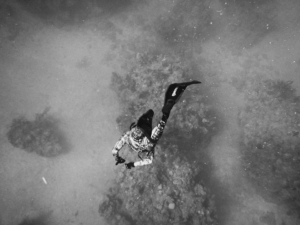 Before “diving” into the history of the dive flag, let’s first take a look at its purpose. The dive flag is used to notify boat captains, as well as other divers, that someone is diving in the waters below. It’s typically attached to a buoy that floats on the surface. If you’re planning to dive, you can deploy a dive flag to create a safer diving environment. While boat-related injuries among divers are rare, they can and do occur.
 To further spread the word about their newly created dive flag, Doc and Ruth approached lawmakers in their home state of Michigan, asking them to adopt the design as the state’s official dive flag. With the help of his local dive club, the couple was successful in their efforts. Michigan then passed a law declaring the couple’s design as the state’s official dive flag. In 1962, a court case involving a diver who was injured from a boat strike cited the use of a dive flag. This was the first time Michigan — or any other state for that matter — recognized the dive flag in law.